What Professional Exterior Power Washing Costs in 2026
Last Updated: November 15, 2026
Quick Summary
Professional power washing costs depend on three main variables: the size of the surface, the material it is made of, and how dirty it is. Quotes are typically built from a square-foot rate plus labor time, then adjusted for surface condition and access. Ask contractors about add-on fees before booking.
- Per-square-foot pricing works best for large flat surfaces like driveways, while hourly rates suit small or mixed jobs.
- Heavy mildew, oxidation, or red dirt staining can require pre-treatment and a second pass, raising the rate.
- Ask each contractor to confirm in writing whether the rate includes solution, pre-treatment, rinse, and cleanup.
- Roofs should only be soft washed, since high pressure strips shingles and granules.
- A recurring schedule keeps each visit faster and cheaper than a one-time deep restoration.
Table of Contents
- What Drives the Cost of Professional Exterior Power Washing
- Cost of Professional Exterior Power Washing per Square Foot
- Pressure Washing Pricing Calculator: How to Estimate Your Job
- How Much Does It Cost to Pressure Wash a 2,500-Square-Foot House?
- Pressure Washing Pricing Guide by Surface and Project Type
- Professional vs. DIY Power Washing: What the Price Actually Buys
- How to Compare Quotes and Verify a Contractor Before You Book
- Booking Your Exterior Wash and Bin Cleaning Service
- Frequently Asked Questions
What Drives the Cost of Professional Exterior Power Washing
Power washing costs for professional exterior work come down to three things: how big the surface is, what it is made of, and how dirty it is. Everything else, from travel time to the season, is a smaller adjustment on top of those three. Pricing depends on the size of the job, the surface, and its condition. For current prices or a quote, contact West Valley Cleaning Top Notch Cleaning through the website.
Many exterior cleaning quotes are built from a square-foot rate plus labor time, then adjusted for surface condition. Pricing depends on quantity, surface type, and access.
Size, Surface, and Condition: The Three Big Variables
Square footage is the starting point. A contractor measures the wash area, not the whole lot, so a house with a large footprint but a small accessible exterior may cost less than it looks.
Surface material changes the method. Concrete, brick, vinyl siding, wood, and pavers all respond differently to water pressure and cleaning solution. Delicate surfaces need lower pressure and more time, and time is what you are paying for.
Surface condition is the wild card. Light dust rinses off quickly. Mold, mildew, red dirt staining, and years of built-up grime take repeated passes, stronger cleaning solution, and more labor. That is why two homes of the same size can get very different quotes.
Add-On Fees and Difficult-Access Surcharges
Some charges appear on a quote that homeowners do not expect. Ask about these up front:
- Access surcharges for locked gates, steep slopes, or surfaces a hose and machine cannot easily reach
- Height charges for second-story siding, rooflines, or anything needing a ladder or lift
- Water access if the property has no working outdoor spigot
- Heavy staining or oxidation that needs a second treatment
- Travel distance outside a contractor's normal service area
A quote that lists these separately is easier to compare than one that hides them in a single number.
Cost of Professional Exterior Power Washing per Square Foot
Exterior power washing is often priced per square foot, and that is a useful number to ask about when comparing quotes. Quotes generally vary with surface, condition, and how much prep work is involved.
Here is how the pricing models compare:
| Pricing Model | How It Works | Best For |
|---|---|---|
| Per square foot | Fixed rate times measured wash area | Large flat surfaces like driveways |
| Hourly rate | Labor time plus materials | Small or mixed jobs |
| Flat project quote | One price for a defined scope | Whole-house washes |
| Recurring schedule | Discounted rate for repeat visits | Commercial and rental properties |
Per-square-foot pricing rewards you when the surface is simple and open. Hourly pricing can cost more if the job drags, so ask for an estimate of labor time before you agree.
How Per-Square-Foot Rates Actually Break Down
Flat concrete work is often priced lower than soft-washed siding, because the method and time per square foot differ. Ask which measurement method any contractor uses, such as total wall area or net washable area, before comparing two numbers.
Surface condition moves the rate more than most homeowners expect. A surface with light dust may be washed in a single pass, while heavy mildew, oxidation, or red dirt staining can require pre-treatment, dwell time, and a second pass. That is why a contractor may quote one rate for a maintained home and a higher rate for a home that has not been washed in several years, even when the square footage is identical.
A Worked Example You Can Compare Against
When you get three quotes, ask each contractor to break the job into the same line items, such as siding, driveway, and patio. If one quote is a single lump sum and another is itemized, you cannot compare them fairly until the lump-sum contractor itemizes.
Watch out: a very low per-square-foot rate can mean a contractor plans to skip pre-treatment. Ask what the rate includes before you treat the lowest number as the best deal.
What the Rate Should Include
A per-square-foot rate is only comparable when you know what it covers. Ask each contractor to confirm in writing whether the rate includes solution, pre-treatment, rinse, and cleanup, and whether any add-on fees apply. That single question does more to make quotes comparable than any calculator.
Pressure Washing Pricing Calculator: How to Estimate Your Job
A simple estimate can help you judge whether a quote is in the right range before you call anyone. It is not meant to produce an exact final price.
Try this rough method:
- Measure the wash area. Multiply length by width for each flat surface. For siding, multiply wall height by wall length and subtract windows and doors.
- Add up your square footage. Total every surface you want cleaned.
- Apply a square-foot rate. Ask contractors for their current rate. It shifts with surface type and condition.
- Add labor time for tough areas. Heavy mildew, rust, or oil stains add hours.
- Add access and height charges. Two-story work and tight spaces cost more.
- Compare against three real quotes. If all three land near your estimate, you have a fair price.
Exterior cleaning costs depend on surface condition and job complexity, so treat your estimate as a starting range, not a promise.
How Much Does It Cost to Pressure Wash a 2,500-Square-Foot House?
Price for a house of that size depends mainly on the exterior surface area, not the interior floor plan. Accessible siding area, stories, and surface condition all affect the final figure.
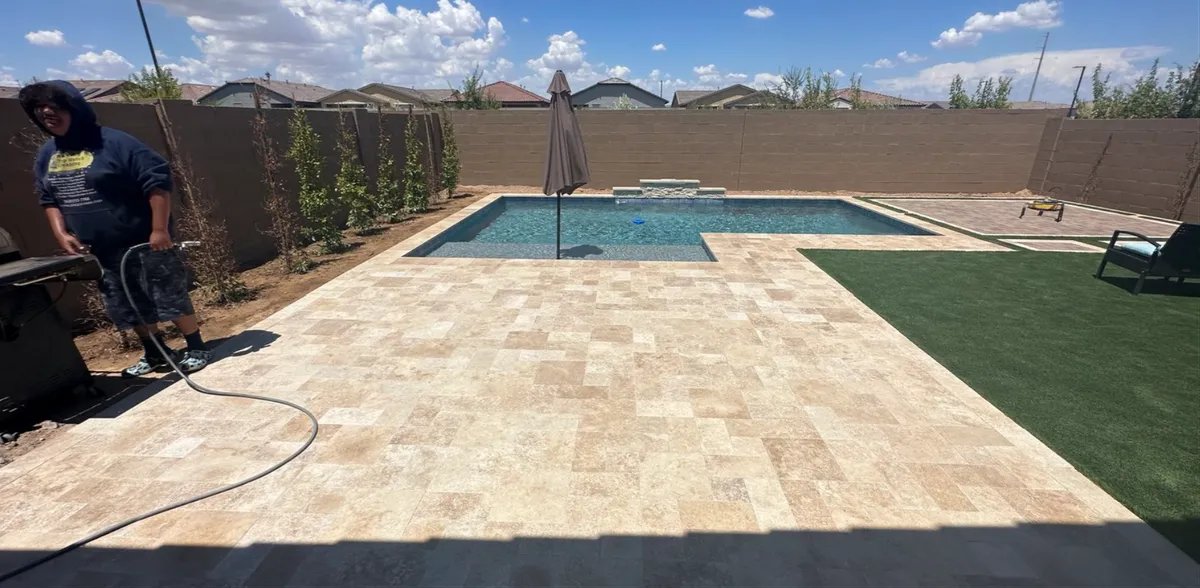
When you request a quote, give the contractor the home's square footage, the number of stories, the siding material, and how long it has been since the last wash. Those four details get you a far more accurate estimate than square footage alone.
Pressure Washing Pricing Guide by Surface and Project Type
Different surfaces carry different price tags because they need different methods. This pressure washing pricing guide breaks down the most common jobs.
| Surface or Project | Method | What Affects Price |
|---|---|---|
| House siding | Soft washing or low pressure | Material, height, mildew |
| Driveway and concrete | High pressure | Stains, cracks, square footage |
| Deck | Low pressure, wood-safe | Wood type, railing detail |
| Patio and pavers | Medium pressure | Joint sand, sealer needs |
| Roof | Soft washing only | Pitch, material, algae |
Driveways, Decks, Patios, and Roofs
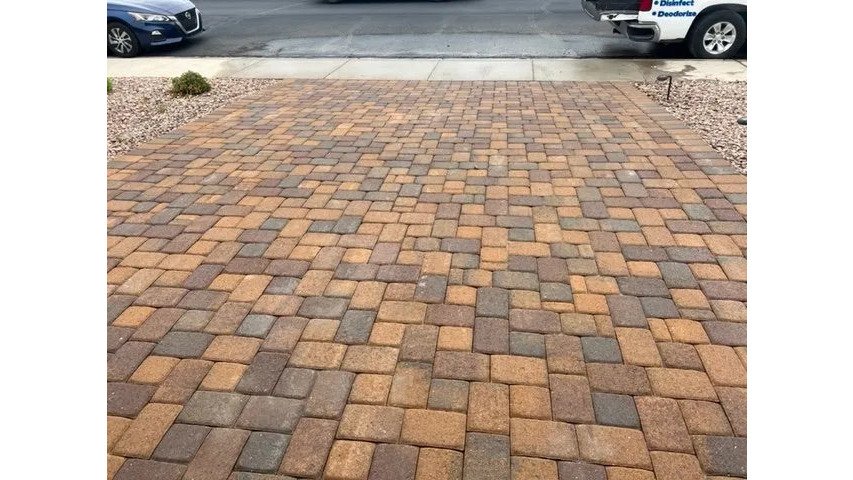
Concrete driveways are usually the most straightforward job: flat, open, and easy to reach. Decks need gentler pressure so the wood grain is not damaged. Patios, especially paver and travertine surfaces, may need joint sand replaced after washing. Roofs should never be hit with high pressure, since that strips shingles and granules; soft washing is the correct method. If your project involves pavers, stone, travertine, or concrete, you can review the restoration and sealing options before you book.
Professional vs. DIY Power Washing: What the Price Actually Buys
DIY is cheaper on paper. A rented machine and a free afternoon can handle light dust on a flat driveway. What the professional price buys is the rest of it.
- Correct pressure for each surface, so siding, wood, and shingles are not damaged
- Commercial cleaning solution suited to mold and mildew
- Liability coverage if something breaks
- Time back, especially in summer heat
- A repeatable result you can schedule instead of dread
Watch out: renting a high-pressure unit and using it on vinyl siding or a wood deck is one of the most common ways homeowners cause damage. Water forced behind siding traps moisture, and too much pressure etches wood and concrete.
How to Compare Quotes and Verify a Contractor Before You Book
Three quotes on the same scope are the only fair comparison, but most homeowners compare a lump sum against an itemized quote and assume the lower number is better. The more useful approach is to standardize the scope first, then compare price. Ask each contractor to quote the same defined job: the same surfaces, the same method per surface, the same inclusions, and the same exclusions. When the scope is identical, the price difference tells you something real about labor, overhead, and insurance rather than about how much each contractor chose to leave out.
Standardize the Scope Before You Compare Price
A quote is only comparable when it states the wash area, the method for each surface, the cleaning solution, and what is excluded. Ask each contractor to itemize those four things in writing. A common pattern is that one quote includes detergent and pre-treatment while another prices them as add-ons, so the headline number understates the real cost of the second quote. Once both are itemized on the same scope, the gap often narrows or reverses.
Verify Licensing, Insurance, and Damage Responsibility
- Confirm the business holds the license or registration required for exterior cleaning work in your state or locality
- Ask for a certificate of liability insurance showing current coverage, and confirm the policy is active by calling the insurer if the certificate looks altered
- Ask whether the business carries workers' compensation coverage, because an uninsured helper injured on your property can create a claim against your homeowner policy
- Confirm in writing who pays if a surface is damaged, a window is etched, or landscaping is crushed
- Ask whether the contractor offers a workmanship warranty and what it covers
Ask These Questions on the Phone
Before you book, ask each contractor the same short list of questions so the answers line up side by side: What method will you use on each surface, and why? Does the price include solution and pre-treatment? What add-on fees could apply, and under what conditions? How long will the job take, and how many people will be on site? What happens if it rains? Do you carry liability and workers' compensation coverage? A contractor who answers these clearly and in writing is easier to hold to the agreed scope than one who gives a single number and a date.
Watch out: a quote that is dramatically lower than others may mean something is excluded. Find the exclusion before you book.
When you are ready to move, you can request a free estimate and compare it against the others on the same standardized scope.
Booking Your Exterior Wash and Bin Cleaning Service
The smartest way to control exterior cleaning costs is to stop treating it as a one-time emergency. A recurring schedule keeps dirt and mildew from building up, which keeps each visit faster and cheaper than a deep restoration.
West Valley Cleaning Top Notch Cleaning handles power washing for residential and commercial properties, plus specialized bin cleaning that tackles the smelly, grimy bins most trash haulers will not touch. If you are weighing a one-time wash against a regular plan, you can check bin cleaning prices and scheduling and see how a recurring visit fits your property. For the full range of what we offer, including power washing and paver sealing, review our exterior cleaning services.
Your exterior surfaces take a beating from sun and dust, and the bins in your garage can take worse. West Valley Cleaning Top Notch Cleaning offers power washing for homes and businesses and specialized bin cleaning. Sign up for Trash Bin Cleaning Service through the website to get started.
Frequently Asked Questions
Is power washing priced by the hour or by the square foot?
Exterior cleaning is often priced by the square foot for flat surfaces, or by the job for house washes. When you request a quote, ask which pricing model is used and what is included, because a low rate can hide add-on fees for stain removal or difficult access.
What factors affect the cost of professional power washing?
The biggest factors are the size of the area being cleaned, the surface material, and its condition. Vinyl siding, brick, concrete, and wood each need different pressure and cleaning solutions, and heavy mold, mildew, or embedded dirt takes more labor time. Access also matters, such as fenced yards, steep roof pitches, and second-story surfaces.
How much does it cost to pressure wash a 2,000-square-foot driveway?
Driveway pricing is often calculated per square foot, so a larger driveway will generally cost more than a smaller one. The final figure depends on concrete condition, oil stains, and whether the surface needs pre-treatment. Ask for the quote in writing and confirm whether stain removal is included, then compare it against other quotes for the same scope. For current prices, contact West Valley Cleaning Top Notch Cleaning through the website.
How long does it take to pressure wash a 2,500-square-foot house?
Job duration depends on the home's size, siding type, how much landscaping needs protecting, and whether delicate surfaces need a gentler method. Adding roofs, driveways, or decks to the same visit adds time. Ask for an estimated time window when you book so you can plan access to the property and outdoor water spigots.

